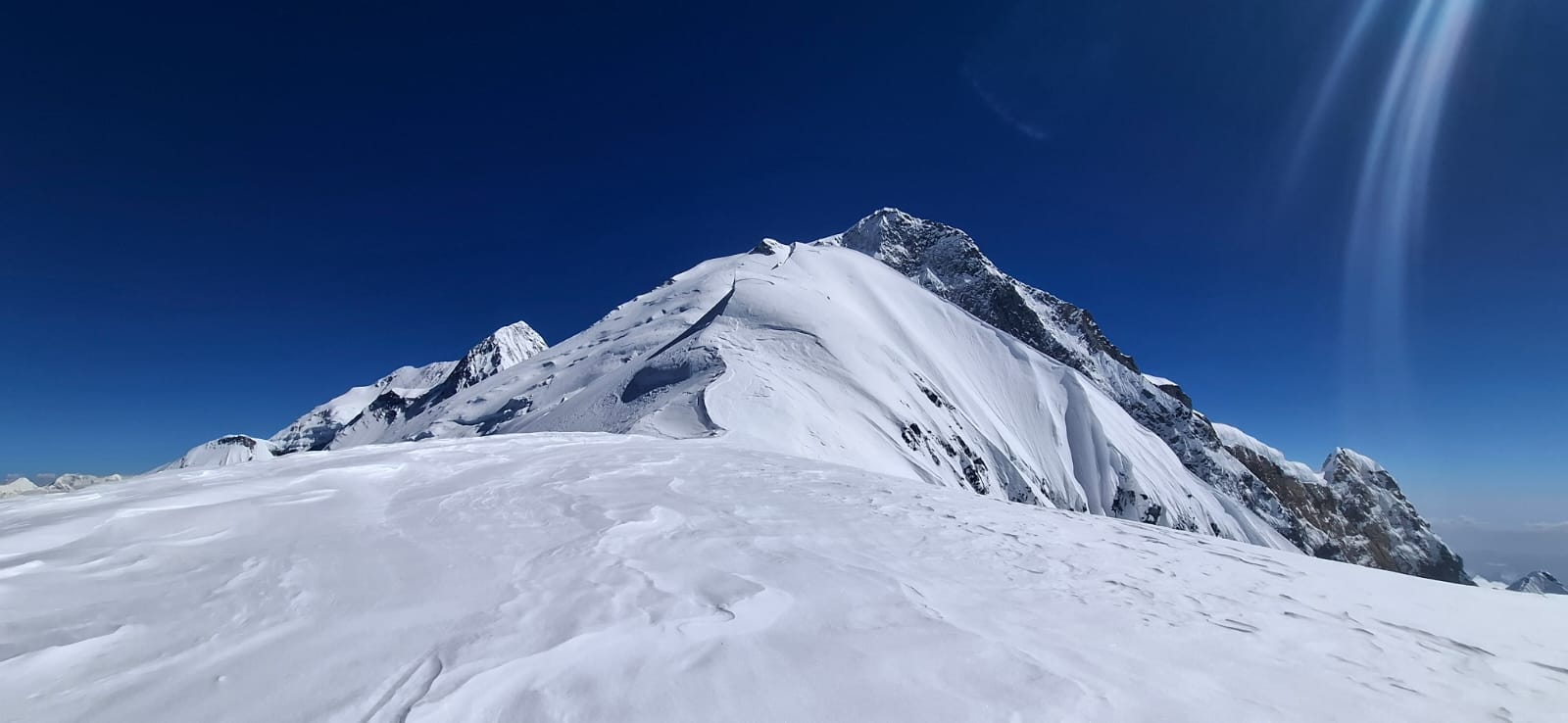
Annapurna IV Expedition (7525m.)


🌄 Annapurna IV & The Annapurna Region: History, Culture, and Himalayan Beauty
1. Historical Background
The Annapurna Himalaya lies within the great Himalayan range of central Nepal.
Annapurna IV (7,525 m) is one of the major peaks in the Annapurna Massif, located east of Annapurna II and connected via ridges and glacial valleys.
The Annapurna region was historically a part of the ancient salt trade route between Tibet and Nepal. Traders used the high passes such as Thorong La (5,416 m) to exchange Tibetan salt, barley, and wool for Nepali grains and goods.
In the late 20th century, the area became famous for mountaineering and trekking after Maurice Herzog’s 1950 ascent of Annapurna I, the first successful summit of an 8,000-meter peak. This opened the entire Annapurna region to international adventure tourism.
The region today falls under the Annapurna Conservation Area Project (ACAP), Nepal’s first and largest conservation area (est. 1986), covering 7,629 sq. km.
2. Cultural Heritage of Manang
The Manang district, sitting in the northern rain-shadow of the Annapurna Himalaya, is known for its unique people, traditions, and lifestyle.
Ethnic Groups
Mainly inhabited by Manangba, an ethnic group with strong Tibetan-Buddhist roots.
Influences from Tibet are seen in architecture, festivals, dress, language, and diet.
Cultural Features
Buddhist monasteries such as Braga (Braga Gompa) and ancient chortens decorate the trails.
Houses are built with flat stone walls, adapted to the cold, dry climate.
Traditional livelihoods include yak herding, barley and buckwheat farming, and historically, cross-border trade.
Festivals
Yartung (horse-racing festival)
Losar (Tibetan New Year)
Chhewar (a boy’s hair-cutting ceremony)
These reflect deep connections to Tibetan Buddhism and mountain traditions.
3. Annapurna Conservation Area (ACA)
The ACA is the most visited trekking region in Nepal and a global biodiversity hotspot.
Key Features
Diverse ecosystems, from subtropical forests to alpine deserts.
Wildlife such as snow leopards, Himalayan tahr, blue sheep, and diverse bird species.
Sustainable tourism model managed by local communities under ACAP.
Famous Trails
Annapurna Circuit Trek (ACT) — passes through Manang, Thorong La, and down to Mustang.
Tilicho Lake Trek — home to one of the highest lakes in the world.
Side routes to Ice Lake, Milarepa Cave, and the glaciers near Annapurna IV.
4. The Beauty of Annapurna IV & Surrounding Mountains
Annapurna IV is known for its:
Sharp ridges and massive north face
Glacial valleys and icefalls
Outstanding views from Manang, Chame, and Pisang
From the Marsyangdi valley, Annapurna IV forms part of the breathtaking skyline together with:
Annapurna II
Annapurna III
Gangapurna
Tilicho Peak
Why Annapurna IV Is Loved by Trekkers
Its pyramid-like shape stands dramatically against clear blue skies.
It reflects golden hues during sunrise and sunset.
The surrounding area offers spectacular panoramas from places like Upper Pisang Viewpoint, Braga Village, and Manang Town.
5. Living Culture & Himalayan Landscape Together
The region beautifully blends:
High Himalayan architecture
Ancient Buddhist traditions
Carefully preserved nature
The raw beauty of the world’s highest mountains
The contrast between the dry, desert-like Manang and the snow-capped Annapurna peaks creates one of the most dramatic landscapes on Earth.
Conclusion
The area around Annapurna IV—within Manang, the Annapurna Region, and the Annapurna Conservation Area—is a place where history, culture, and nature coexist in a remarkable harmony. From ancient trade routes and Tibetan Buddhist traditions to soaring glaciers and the majestic Himalayan peaks, this region stands as one of Nepal’s most beautiful and culturally rich destinations.
If you want, I can also create:
✅ a shorter summary
✅ a travel guide
✅ a poetic description
✅ a social-media style caption
Just tell me!
Itinerary
Day 1 Arrival in Kathmandu airport drop & pickup to the hotel (1300m)
Days 2 briefing, and preparing for Expedition
Days 3 drive to bimalnangar
Days 4-9 stay at bimalnangar multi-pitch rock climbing
Days 10 drive to besishahar (760m)
Days 11 drive to dharapani (1860m)
Days 12 trek chame or koto (2600m)
Days 13 trek pisang (3200m)
Days 14 trek to humde (3350m)
Days 15 rest day at humde
Days 16 trek to basecamp 8hr. (4892m)
Days 17-27 rotation base-camp–rotation camp I and camp II–base-camp
Days 28-33 climbing period –annapurna IV summit (7,575m) – basecamp]
Days 34 trek to humde
Days 35 drive to beshi-sahar
Days 36 drive to Kathmandu transfer to the hotel
Days 37 Leisure day in Kathmandu city
Days 38 Transfer to the International Airport for final departure back to hom
Photo Gallery